Twitch’s New Co-Streaming Feature
Twitch announced new Co-Streaming features designed to amplify large-scale events by combining viewership across multiple channels.
New Twitch Co-Streaming Feature Targets Major Events
Twitch finally announced official support for something that’s been happening informally on the platform for years: co-streaming. The new feature lets Main Broadcasters (event organizers, brands, and select partners) authorize specific streamers to rebroadcast their content while adding their own commentary.
The key innovation here is combined viewership metrics. For the first time, Twitch will aggregate viewer counts across all approved co-streams, giving event organizers a complete picture of their total reach.
Here’s what makes this different from informal co-streaming:
- Allowlist System: Main Broadcasters control exactly who can co-stream their content
- Shared Metrics: Combined viewership appears in discovery surfaces and rankings
- Analytics Dashboard: Event organizers get detailed breakdowns of reach across all co-streams
The Catch: Access is Extremely Limited
Reading through Twitch’s announcement reveals the most important detail: this feature is not for average streamers.
The language is consistent throughout: Co-Streaming is “designed for special broadcasts with extra-large reach such as esports tournaments or major streamer-led shows.” To become a Main Broadcaster, you need to “reach out to Twitch through your partnerships or support contact.”
Translation: This is for large event organizers, brands, and select partners who already have direct relationships with Twitch.
The examples Twitch provides make this clear:
- Large-scale esports events broadcast worldwide
- Official game announcements streamed to global audiences
- Community-driven celebrations of content creators
- Record-breaking events featuring influencer-led entertainment
We’re talking about events like The Streamer Awards, major esports tournaments, or perhaps something like Ludwig’s Creator Games.
How It Actually Works
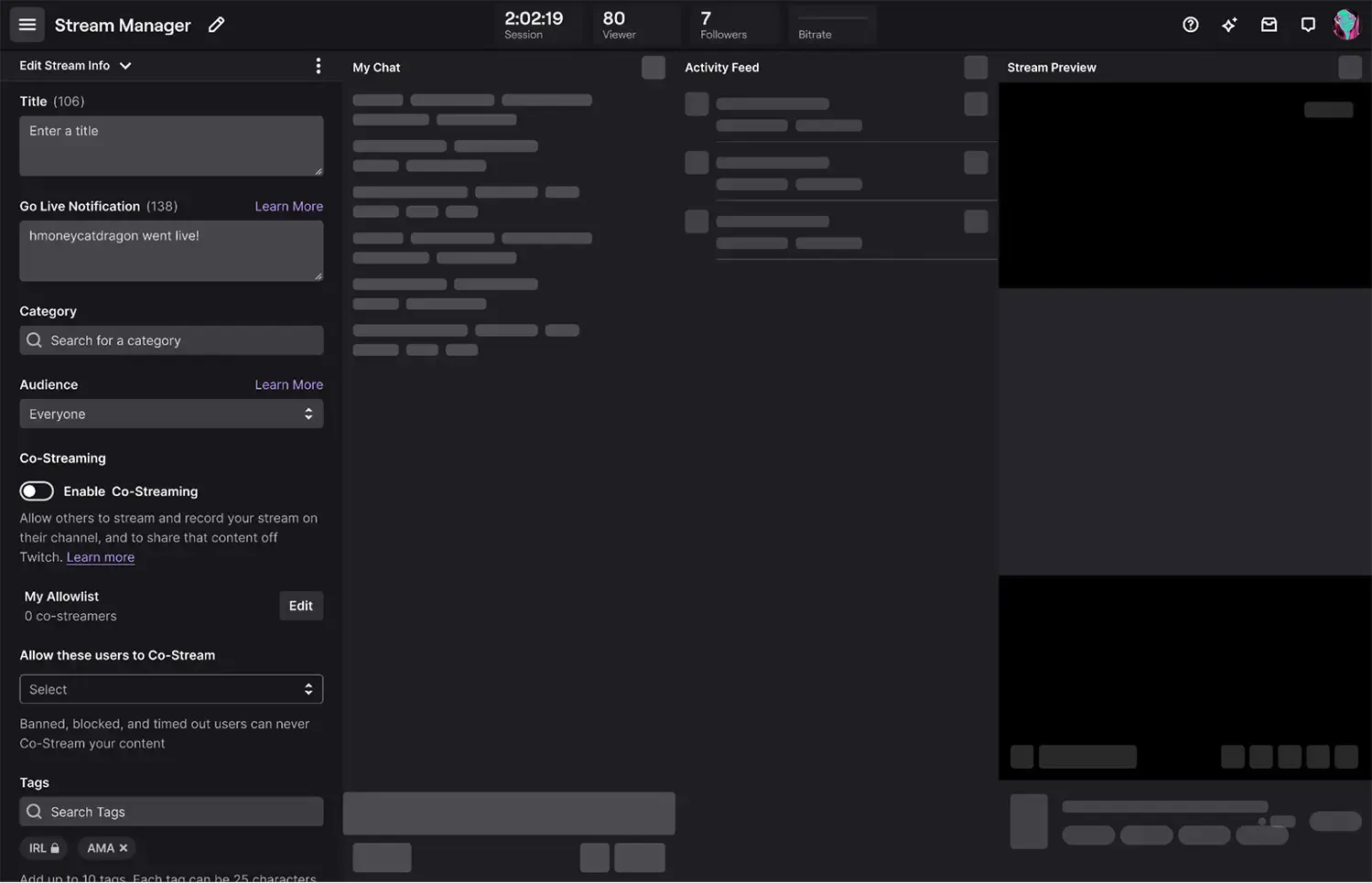
For Main Broadcasters:
- Enable Co-Streaming in Stream Manager
- Build an allowlist of approved co-streamers
- Choose whether to limit co-streaming to just your allowlist or expand to all Partners and Affiliates
- Start streaming and notify allowlisted streamers
- Access combined analytics showing total reach
For Co-Streamers:
- Start streaming the event through OBS
- Navigate to the Main Broadcaster’s channel
- Click the “Co-Stream” button to officially join
- Add your own commentary and community engagement
- Your viewership counts toward both your individual CCV and the combined event total
Important: You must click the “Co-Stream” button even if you’re already capturing the broadcast in OBS. Simply rebroadcasting without officially initiating means your viewership won’t count toward the event’s total reach.
The combined viewership appearing in discovery is significant. If an event has 50,000 viewers on the main broadcast and 50 co-streams averaging 1,000 viewers each, the total displayed viewership could be 100,000, dramatically improving the event’s visibility.
The Guidelines
Key responsibilities for Co-Streamers:
- You’re still responsible for your stream: You must comply with Twitch’s Terms of Service and Community Guidelines. If the Main Broadcaster violates Twitch policies, you’re expected to clearly condemn it.
- DMCA risk exists: If the main broadcast contains unauthorized copyrighted material, both you and the Main Broadcaster could receive DMCA notifications.
- Ads will appear: Twitch ads from the main broadcast will show on your co-stream if you’re not subscribed to that channel or don’t have Twitch Turbo.
Looking Forward
Co-Streaming represents Twitch’s attempt to formalize what has been happening organically for years. By creating official systems with proper permissions and analytics, they’re capturing more value from major events while giving organizers better measurement tools.
The combined viewership metric is particularly strategic. If you’re Riot Games and can tell sponsors your tournament reached 500,000 concurrent viewers across 200+ co-streams rather than just 100,000 on your main channel, that’s significantly more compelling.
If you’re a Partner or Affiliate with a decent audience, you might get allowlisted to co-stream major events, providing exposure and community-building opportunities. But becoming a Main Broadcaster seems to be reserved for major events and established organizations with existing Twitch partnerships.
If you think you have a special event that qualifies but don’t have a Twitch partner contact, they’ve opened a support form for requests, though they note “not all requests will receive a response.” That’s the clearest indication of how selective this feature will be.
Pete’s Content Corner
Delve into my weekly selection of content creation highlights – handpicked videos, podcasts, and tweets that promise to captivate, educate, and entertain.
- YouTube officially launched its Second Chances pilot program, allowing some previously terminated creators to request new channels after one year. This is a fresh start with no content or subscribers restored, and it’s not available for copyright violations or Creator Responsibility policy breaches.
- Twitch addressed viewcount concerns in the Partner Discord, revealing that browser extensions opening multiple tabs and IP session limits are causing unexpected drops for some streamers. They’ve also clarified that viewcount updates more frequently than the chatters list, which can create confusion about audience size.
- TwitchCon San Diego shared extensive details about event security measures amid safety concerns. The venue will feature screening at all entry points, armed law enforcement presence, a 24/7 command center, and processes to identify suspended users attempting to purchase tickets.
Thanks, as always, for taking the time to read Stream Report.
Pete ✌️